
The short version
Three things to keep in mind.
- 01
Describe the role in a clear sentence.
- 02
Check the rules for each intended setting.
- 03
Remember that equipment is not a qualification.
What to remember
Your useful takeaways.
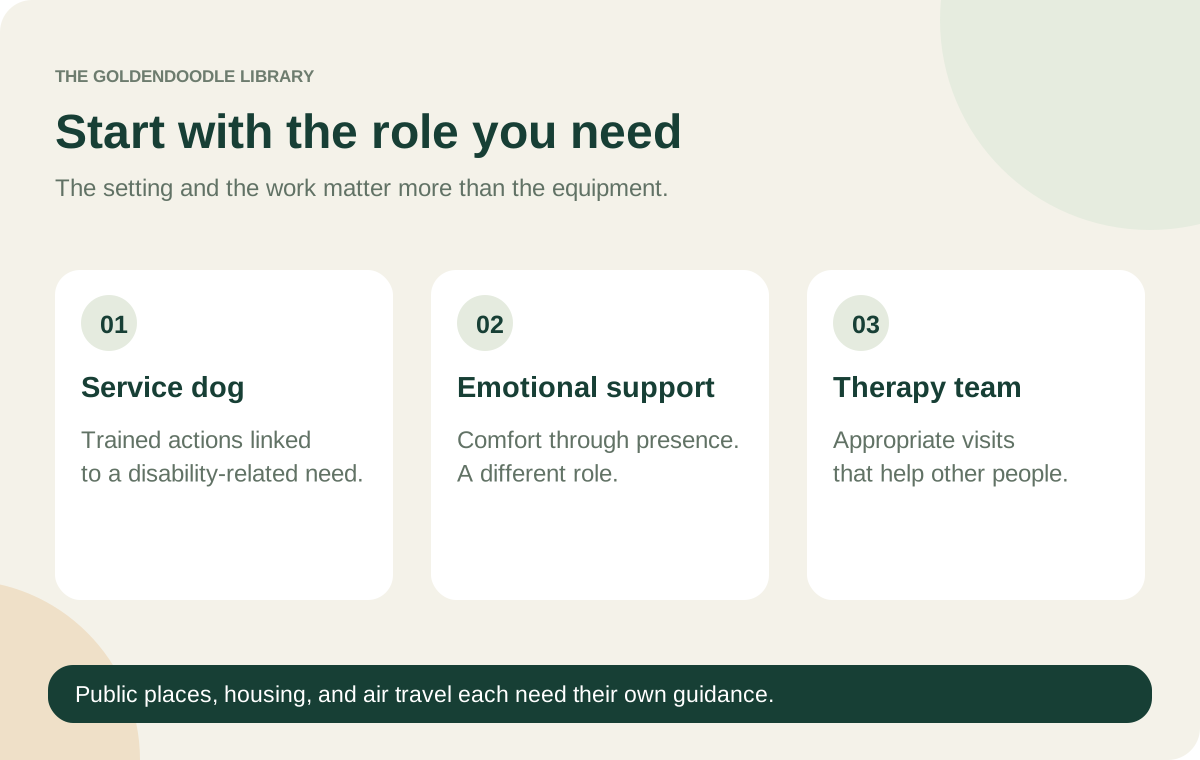
- A task-trained service dog and an animal whose presence is comforting are different categories.
- Therapy visiting is a team activity for helping other people through appropriate facilities or programs.
- Public businesses, housing, and air travel follow different frameworks.
- A vest, registry, or certificate does not turn a puppy into a trained service dog.
A little more detail
Explore the questions that matter to you.
Open a section when you want the why behind the short answer.
01The task-trained service role
Under the ADA, a service dog is individually trained to perform disability-related work or tasks. A psychiatric service task can qualify; simply being reassuring does not, by itself, meet that definition. The important distinction is trained action tied to the individual’s disability.
For an initial planning conversation, describe the action in observable terms: what starts it, what the dog does, and when it finishes. Bring that description to a qualified service-dog professional. The family can then discuss whether the job is realistic, appropriate, and safe for both partners.
References: [1]
02Comfort at home and therapy visiting
An emotional support animal’s role centers on support through its presence and relationship with a person. Discuss that need with the professional involved in the person’s care, rather than assuming an online purchase establishes it. A treasured companion can be valuable without being described as a working service dog.
Therapy-animal work is different again. Pet Partners describes teams that visit people in community settings, rather than animals working primarily for their own handler. The organization has its own preparation and evaluation process. A family interested in volunteering should investigate the particular program’s standards before selecting a puppy for that ambition.
References: [2]
03Keep the setting separate from the label
A store visit, an apartment accommodation, and an airline journey are three separate planning problems. The ADA framework for public businesses is not a complete explanation of housing or aviation requirements. DOT has its own service-animal definition and permitted airline forms; emotional support animals are not included in its service-animal category.
For housing, consult current HUD information and qualified local fair-housing guidance for the individual request. Do not rely on an old social-media summary or assume that one letter resolves every situation. Check the current official guidance and the requirements that apply to the property and individual request.
04Choose a path before choosing equipment
Write a one-page role description before buying specialized gear. Include where the dog would go, who would handle it, which trained actions are needed, and what a successful day would look like. If the aim is simply a loving family companion, say so openly; that leads to a better matching discussion.
Ask a breeder what is being offered now: a puppy, a prospect, a partly trained dog, or a finished working partnership. Request separate explanations of purchase arrangements, training services, and follow-up support. Clear language at the beginning protects the family’s expectations and gives the dog a fairer start.
- Describe the actual role in one sentence.
- Identify the professional who can assess that role.
- Confirm requirements for each setting you intend to use.
- Keep promises about suitability separate from the puppy’s pedigree.
Sources & further reading
References supporting this guide; inclusion does not imply endorsement of our program.
- U.S. Department of Justice: Service Animal FAQs ↗
- Pet Partners: Volunteer FAQs and Therapy-Animal Roles ↗
- U.S. Department of Transportation: Service Animals and Air Travel ↗
- HUD: Assistance Animals and Housing Accommodation ↗
For an individual dog’s health or behavior, consult your veterinarian or qualified trainer. For access or funding questions, check current official guidance.
A personal next step
Talk it through with Blaine.
Ask about a planned pairing, puppy matching, or preparing for home.