The short version
Three things to keep in mind.
- 01
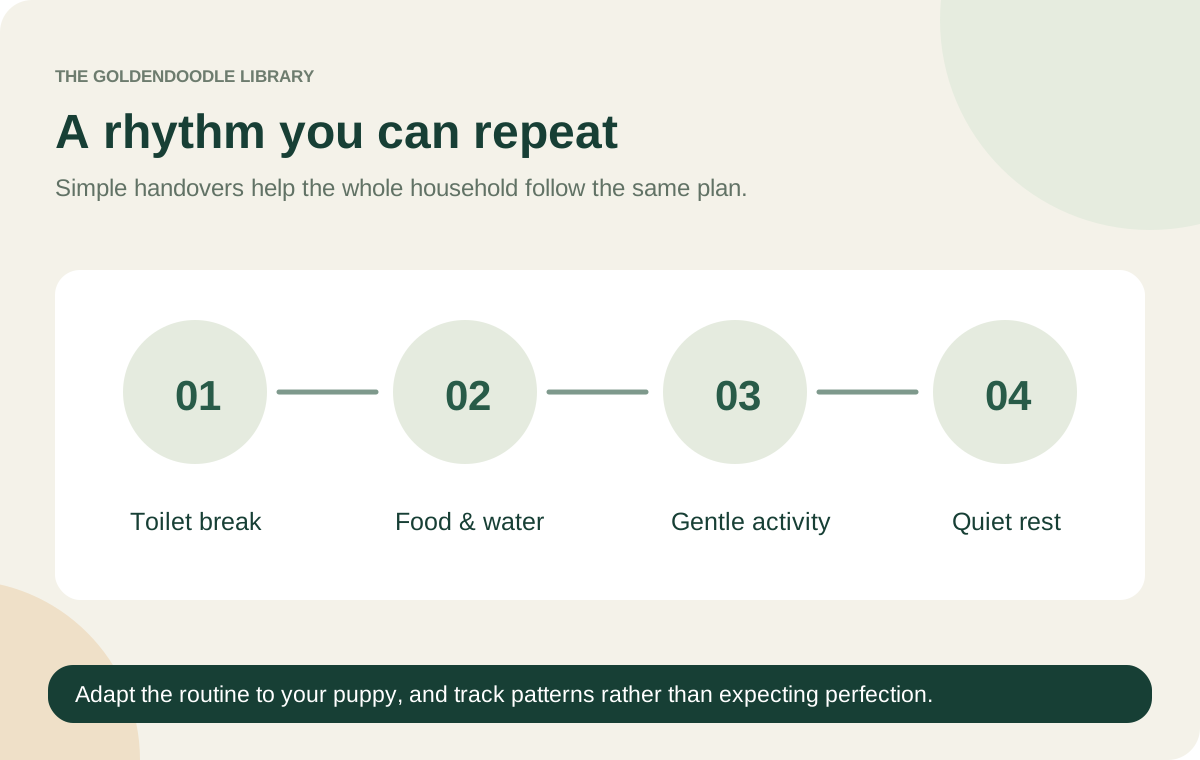
Offer breaks around waking, meals, and activity.
- 02
Go with the puppy and reward at the location.
- 03
Ask your vet about sudden or concerning changes.
What to remember
Your useful takeaways.
- Offer toilet opportunities around waking, eating, drinking, and activity.
- Accompany the puppy and reward at the toilet location.
- Use supervision or a safe prepared area between opportunities.
- Ask your veterinarian about sudden changes or concerning signs.
A little more detail
Explore the questions that matter to you.
Open a section when you want the why behind the short answer.
01Make the right location predictable
VCA recommends beginning promptly, selecting an appropriate toilet area, and using consistency, supervision, and reinforcement. Puppies need frequent opportunities, including around sleep, meals, drinking, and active play. Individual needs vary, so a clock rule alone will not replace watching the puppy. Ask your veterinary team about suitable outdoor locations before protection is complete.
Go with the puppy rather than sending them outside alone. When they toilet in the planned location, reward there, promptly. Waiting until you return indoors can make the connection less clear. If nothing happens, return to close supervision and offer another appropriate opportunity rather than immediately allowing unsupervised access to the home.
References: [1]
02Use a log that answers a question
For three ordinary days, record waking, meals, drinks, activity, outings, and accidents. Do not use the record to judge family members. Its purpose is to reveal where the routine needs support. An accident during the afternoon handover suggests a different fix from one after every long play session.
Use these headings: time, what happened before, opportunity offered, result, next adjustment. Keep entries short enough that people will actually make them. If two caregivers use different doors or destinations, the log will also reveal that inconsistency. Bring the notes to your veterinarian or trainer when asking for help, especially if the pattern changes unexpectedly.
| Record | What to write |
|---|---|
| Before | Woke from nap; finished meal; active play |
| Opportunity | Time and planned toilet location |
| Result | Toileted; did not toilet; accident later |
| Adjustment | Who will supervise and when to offer the next opportunity |
03Respond to accidents without punishment
VCA advises against punishing a dog for toileting, particularly after the event. Retrospective scolding does not teach the preferred location and can make toileting around a person uncomfortable. Clean the area appropriately, review the supervision gap, and set up a better opportunity next time.
Think about access in small steps. A puppy who has practiced successfully in one room is not automatically ready for the whole house. Expand freedom deliberately while you continue watching patterns. A pen or another prepared area can help when direct supervision is temporarily unavailable, but it must still account for the puppy’s need to eliminate.
References: [2]
04Know when the question belongs with your vet
Keep your veterinary team involved in puppy care and discuss concerns rather than assuming every change is a training problem. Tell them about new accidents, changes in urine or stool, discomfort, or anything else that seems unusual. A general article cannot determine whether a particular change is behavioral, medical, or a combination.
For routine setbacks, ask a practical question: did the household schedule change, did the puppy gain new access, or did supervision become less consistent? Change one part of the setup and keep recording. Avoid making several unrelated changes at once, because you will have less idea which adjustment actually made the routine easier to follow.
References: [3]
Sources & further reading
References supporting this guide; inclusion does not imply endorsement of our program.
- VCA: House Training for Puppies and Dogs ↗
- VCA: Puppy Recommendations for New Owners — General Care ↗
- VCA: Testing for Inappropriate Urination ↗
For an individual dog’s health or behavior, consult your veterinarian or qualified trainer. For access or funding questions, check current official guidance.
A personal next step
Talk it through with Blaine.
Ask about a planned pairing, puppy matching, or preparing for home.