The Goldendoodle resource library
Your Goldendoodle library.
A picture, a clear answer, and a useful next step. Explore puppy life, coat care, breeding, and service-dog questions at your own pace.
7 topics to explore
Showing all 31 guides
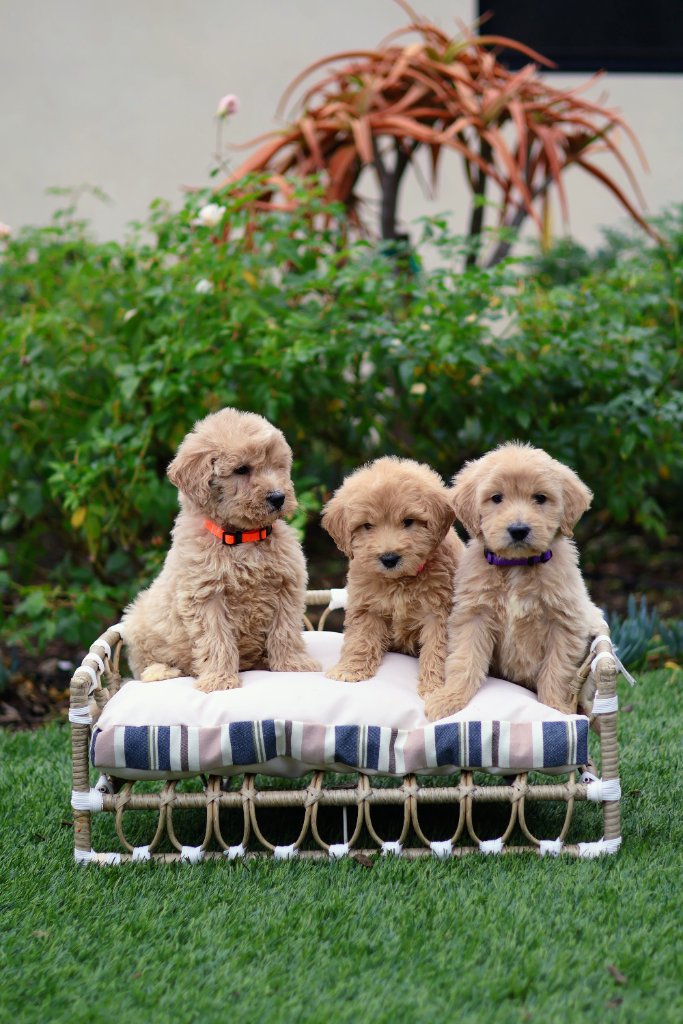 01Breeding & Genetics
Goldendoodle generations, simply
The label starts the conversation. The actual parents, records, and individual puppy tell the more useful story.
 02Breeding & Genetics
F1B & F2B: the parentage math
Expected ancestry can be averaged on paper. That arithmetic does not predict a particular puppy’s coat, personality, or allergy suitability.
 03Breeding & Genetics
Two parent breeds. One individual.
Golden Retriever and Poodle ancestry both matter. Choose around the individual pairing and the life your household can provide.
 04Breeding & Genetics
Curl, furnishings & shedding
A teddy-bear face, curly hair, and low shedding are different questions. Ask exactly which trait a test or claim describes.
- 05Grooming & Health
Low shedding is not allergy-proof
No dog breed can promise comfort for every allergic person. Build a medical and practical plan before making a placement commitment.
 06Breeding & Genetics
How big might your puppy get?
Parent sizes and adult relatives help frame a useful range. Marketing labels and ancestry percentages cannot guarantee adult size.
- 07Breeding & Genetics
Make the family tree useful
A pedigree gives you a starting point for checking identity and asking about relatives. It is separate from health results and trained skills.
- 08Breeding & Genetics
Health screening: the whole picture
DNA tests and clinical exams answer different questions. Review actual results for both parents and discuss what remains uncertain.
- 09Breeding & Genetics
What genetic diversity can tell us
Crossbreeding does not remove every inherited risk. Relatedness, disease screening, and the individual pairing still deserve separate attention.
 10Breeding & Genetics
A practical breeder checklist
A good conversation covers the purpose of the pairing, understandable records, daily puppy care, matching, and ongoing support.
 11Service & ESA Education
Service, support & therapy roles
Start with what the dog will actually do. Service work, comforting presence, and therapy visits have different purposes and rules.
- 12Service & ESA Education
Plan a task around real life
Describe an individual difficulty before proposing a dog task. Include the person’s preferences, professional assessment, and backup human support.
- 13Service & ESA Education
A prospect is still a puppy
Service-line ancestry is a starting point for questions. Individual suitability, development, welfare, and professional assessment remain essential.
- 14Service & ESA Education
From puppy to a possible partner
Start with an everyday relationship and useful life skills. Review suitability before increasing the demands, and keep support in place.
- 15Service & ESA Education
Choose a trainer with clear goals
Ask about relevant experience, humane methods, measurable goals, and follow-up. A written plan is more useful than a promise of success.
- 16Service & ESA Education
Public access, one setting at a time
A trained service dog’s public access is different from housing or air travel. Confirm the framework for the place you plan to visit.
 17Service & ESA Education
Is your household ready?
Give the person and dog room to be comfortable. An adult must own supervision, care handovers, and the backup plan.
- 18Service & ESA Education
Questions for your SDP team
Connect the proposed support to the person’s own outcomes. Get written guidance before assuming that a purchase or reimbursement is approved.
- 19Goldendoodle Care
Your first week, with a little rhythm
Prepare a quiet base, repeat a workable routine, and share care responsibilities. Track what helps rather than expecting a perfect first night.
- 20Puppy Training
Socialization without overwhelm
Useful learning can happen at a comfortable distance. Balance positive experiences with infection precautions and your veterinarian’s local advice.
- 21Puppy Training
Teach a little. Reward a lot.
Choose rewards your puppy values and practice when success is possible. Teach a useful alternative and give the household one clear plan.
- 22Puppy Training
A resting place your puppy can trust
Choose a safe resting setup and introduce it in tiny positive steps. Increasing distress is a reason to seek help, not push harder.
- 23Puppy Training
A toilet plan you can repeat
Timely opportunities, active supervision, and rewards at the right place help reveal progress. Use a simple log to spot missed patterns.
- 24Grooming & Health
Comfortable grooming, step by step
Make regular coat checks and kind handling part of the routine. Ask for a practical demonstration, and get help for painful or extensive mats.
- 25Grooming & Health
Ears & skin: notice the change
Record changes in comfort, scratching, discharge, or appearance. Let your veterinary team choose the cleaning or treatment plan.
- 26Grooming & Health
Food, portions & useful observations
Choose a growth-appropriate diet and measure what your puppy eats. Use veterinary growth and body-condition checks to adjust the plan.
- 27Goldendoodle Care
Movement, sniffing, learning & rest
Offer manageable activities and choices instead of chasing exhaustion. Your puppy’s response is useful feedback about what to change.
- 28Goldendoodle Care
Children & puppies: room to choose
An attentive adult guides short, comfortable interactions and protects meals, rest, and retreat spaces. Step in early when either partner needs space.
- 29Goldendoodle Care
A puppy-ready home, room by room
Start with a manageable safe area and equipment chosen for its job. Rehearse care handovers as well as buying supplies.
- 30San Diego Dog-Friendly Lifestyle
A sensible San Diego outing
Check conditions, surfaces, shade, and water before you go. Know your veterinary route, and treat suspected heatstroke as an emergency.
- 31Behind the Scenes
A thoughtful puppy match starts here
Share daily routines and hopes before narrowing in on appearance. Ask about the actual parents, individual puppy observations, and support after homecoming.
No guides match yet.
Try a broader search, choose another topic, or clear the filters.
Written for this resource library · November 4, 2026. Each guide links to its sources. Veterinary, training, access, and funding decisions depend on the individual situation; use the relevant professional or official source for personal guidance.